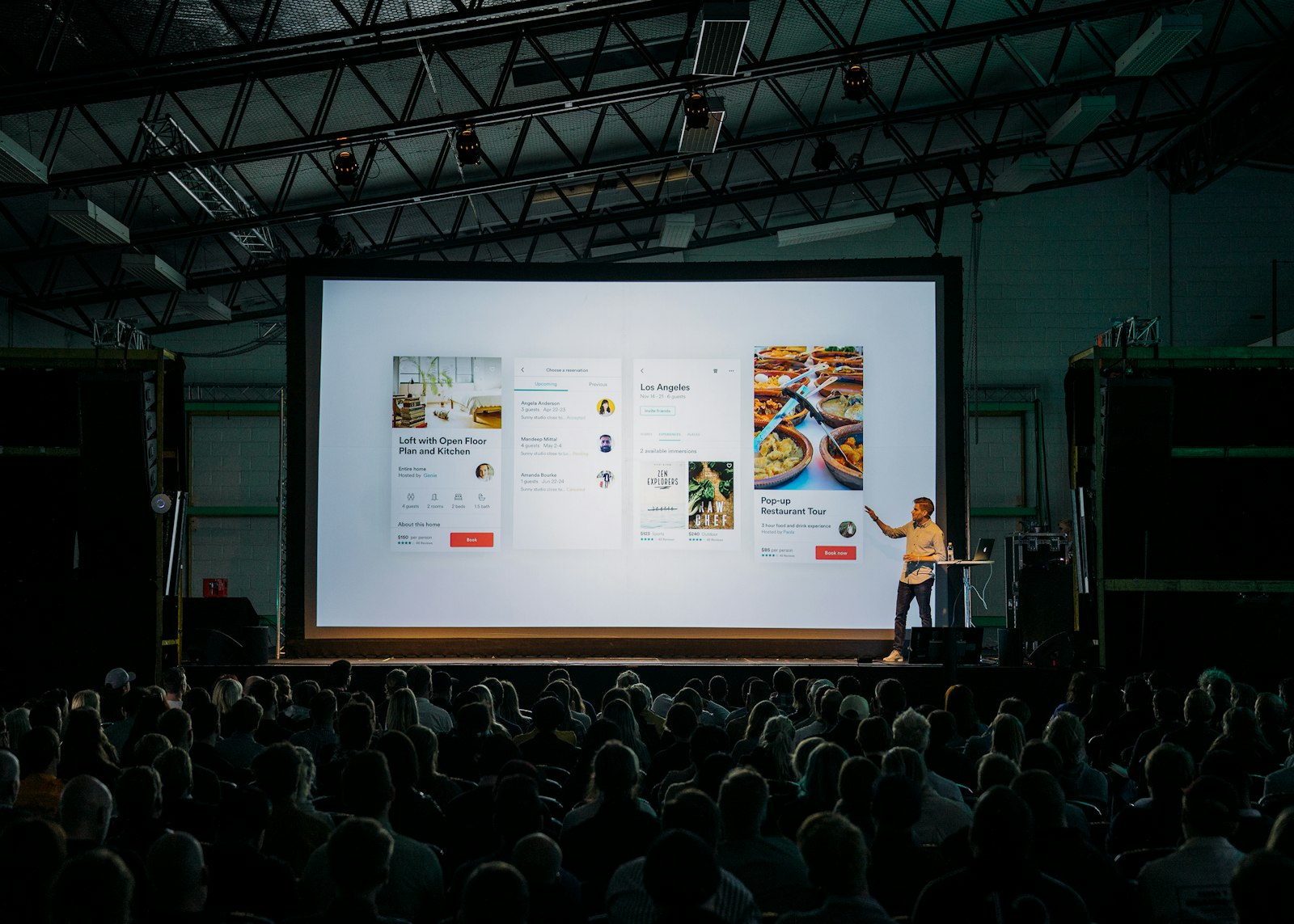
I have sat through hundreds of biotech talks. I can count on one hand the ones I still think about. And not one of them was a keynote.
The talks that stayed with me were almost accidents. A process scientist who admitted, on stage, that her team's lead candidate failed forty-seven times before they understood why — and walked us through every wrong turn. A regulatory affairs lead who described, with the dry honesty of someone who'd survived it, the FDA meeting that went sideways and what he'd do differently. A junior computational biologist who explained a pipeline hack so clearly that half the room was scribbling it down. None of them were polished. All of them were true. And every one of them was the kind of talk that the official program never quite makes room for.
Because here is the uncomfortable thing about most conferences: the people on stage are rarely the people doing the work. We give the microphone to CEOs and investors and platform-company founders — people with important things to say, certainly, but who are paid, in part, to be optimistic in public. What we lose is the texture. The failures. The forty-seven attempts. The specific, hard-won, slightly embarrassing knowledge that only exists in the heads of practitioners and only comes out in the hallway, after the session, when the slides are off and nobody's recording.
The hallway was always the real conference
Everyone in biotech knows this secret. We talk about it openly. We schedule our flights around it. The phrase “the best part was the hallway track” has been said at every conference I've ever attended, usually with a shrug, as if it were an unavoidable law of nature that the valuable conversations have to happen around the event rather than in it.
We refuse to accept that. The hallway conversation isn't a consolation prize for a boring program — it's evidence of what people actually want. They want honesty. They want specificity. They want to hear from someone who has stood exactly where they're standing and can tell them what's around the corner. So we asked a simple, almost stubborn question: what if the hallway was the main stage?
The expertise that matters most in biotech rarely makes it onto a stage. It lives in the people who do the work — and it comes out only when we make it safe, and worth their while, to say it out loud.
That is the whole of BIOTOLD. No CEO keynotes. No investor panels. No proprietary pipeline data — we don't want it and you shouldn't share it. We want the how and the why: the methods, the lessons, the career turns, the experiment that finally worked. We want the bench scientist, the process engineer, the QA analyst, the medical writer. We want first-time speakers who have never held a microphone but have a story the rest of us need to hear. And we'll do the unglamorous work of making them ready: coaching, a real stage, a professional recording they keep for themselves.
Boston is the right place to try this. It's the densest concentration of life-sciences talent on the planet — from Kendall Square to the Seaport, the people who actually make medicines happen are all within a few miles of each other. They show up for each other on Tuesday nights already. We just want to give them a stage worthy of what they know, and an audience that has been waiting, quietly, for someone to finally give the talk they always wished someone would give.
That someone is you. Apply to speak at BIOTOLD 2026 →